How We Built AFFMashup in 3 Days With Claude Code and Apify

By :
Ali
July 22, 2026
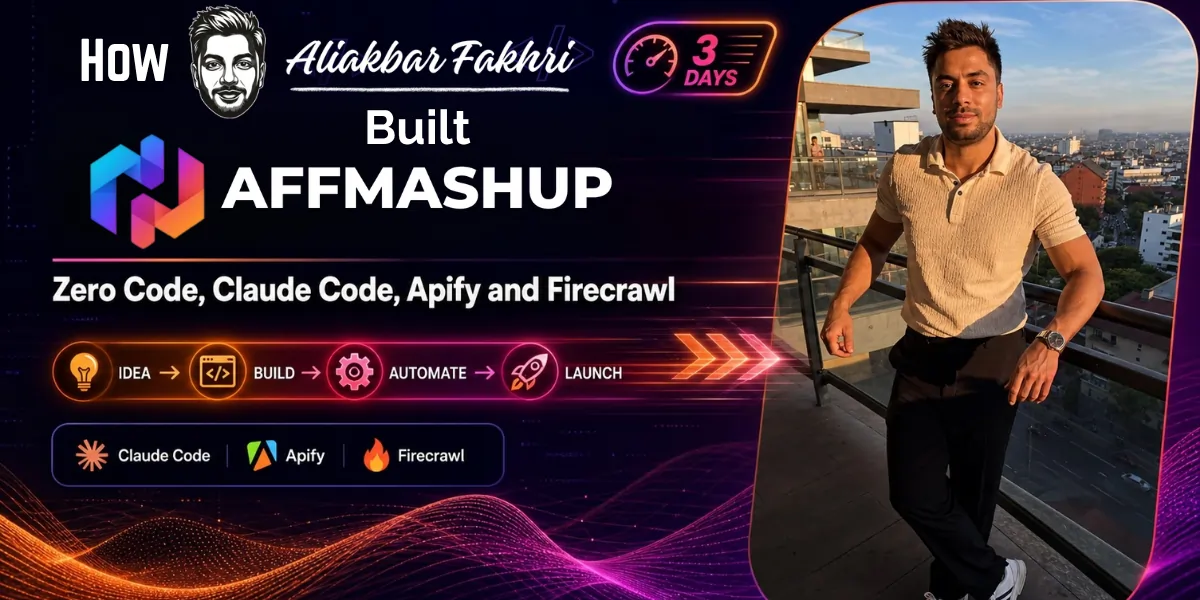
I do not write code. Not one line. I could not write a for loop if you paid me for it.
In April 2026, my team and I still shipped AFFMashup, a full event discovery platform for the affiliate industry, in 3 days of focused work.
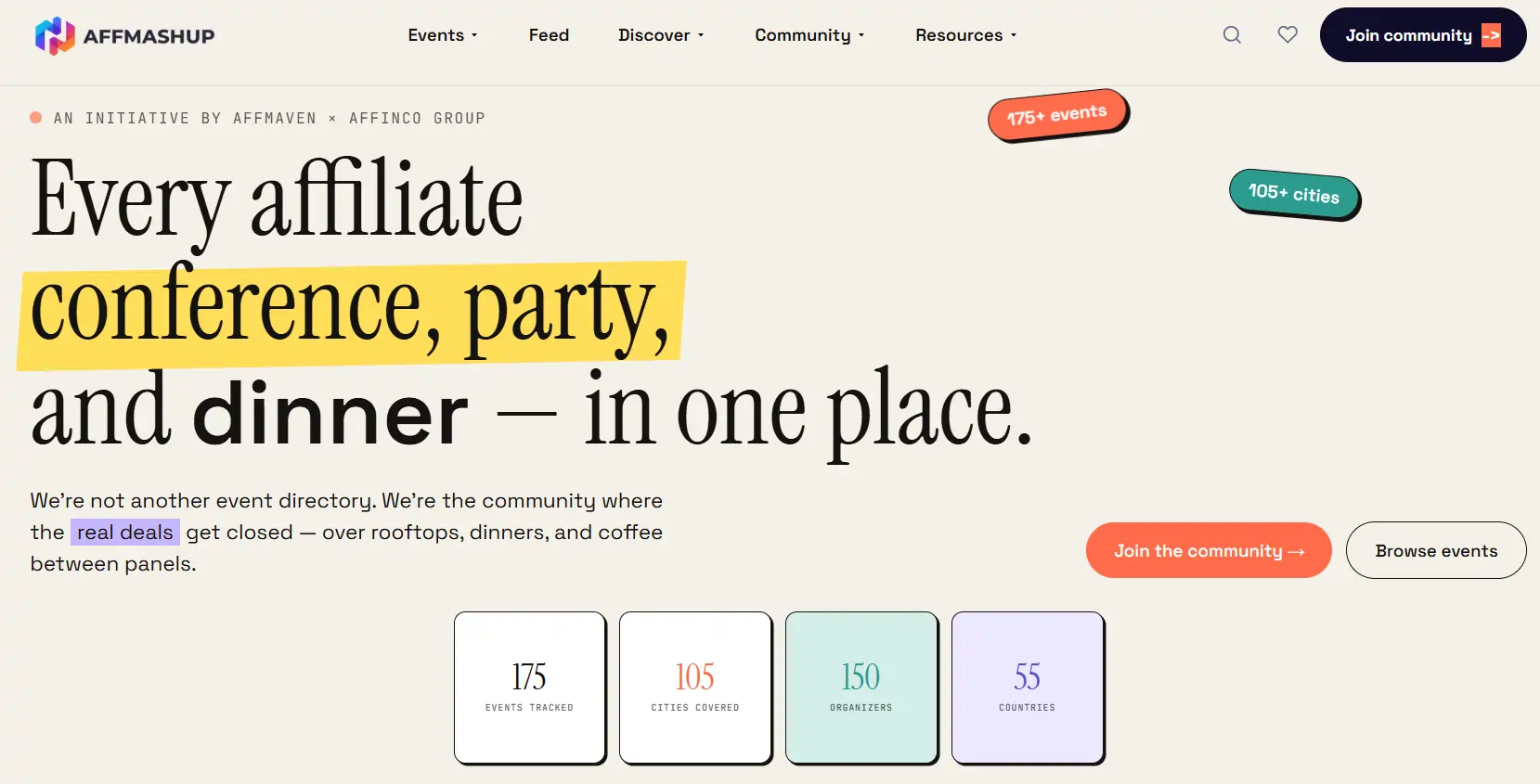
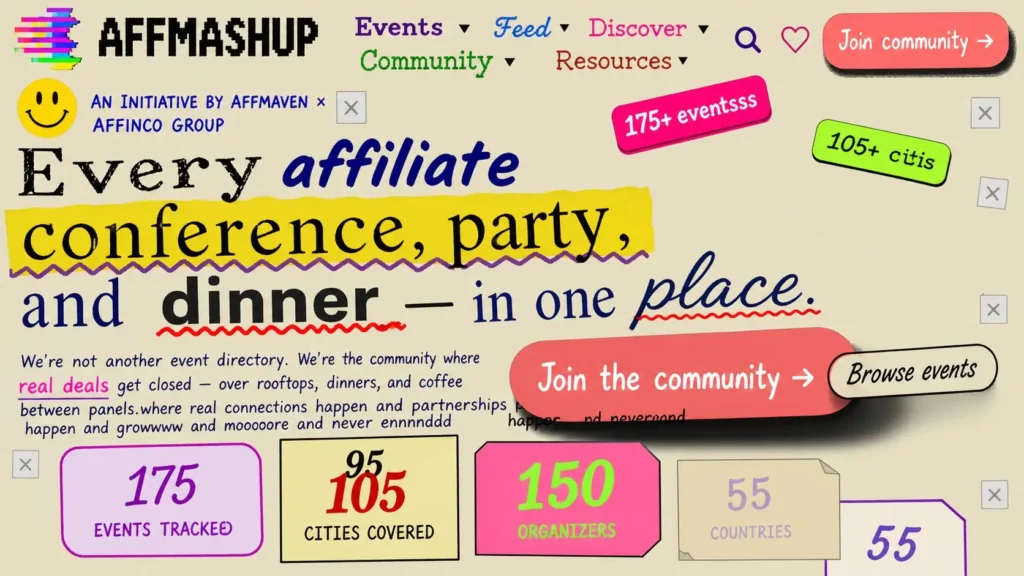
Today it lists 150+ affiliate conferences, summits, and after-parties worldwide, runs a Telegram bot that people actually use, signs members in with LinkedIn, and maintains its own event database automatically while we sleep.
The stack behind it: Claude Cowork wrote the spec, Claude Code wrote the application, and Apify plus Firecrawl run the data backbone that keeps every event listing fresh without a human touching anything.
This is the full case study. What we built, what failed first, exactly how the automated data pipeline works, and what the whole thing costs to run. Spoiler on that last one: pennies.
What AFFMashup Is (And Why We Built It)
I have been on the affiliate conference circuit since 2019. Affiliate World in Dubai, Bangkok, Barcelona, and Budapest. AWSummit. TES. The whole calendar. And every single year, the same problem: there was no one place that answered the basic operator questions.
Event info lived scattered across dozens of organizer websites, half-updated LinkedIn posts, and Telegram groups you had to already be inside to find.
So we built the thing we wished existed. AFFMashup today ships with:
It launched as an initiative of AFFMaven, and it is now getting real traction in the affiliate and creator community. Not vanity traffic. People signing in, saving events, and messaging the bot.
Now the part you actually came for: how a team with zero developers built this in 3 days.
The First Version Failed (Honesty Before the Playbook)
I write about what actually happens, including the parts that make me look less clever.
Our first attempt at AFFMashup was not built on Claude Code. We tried building it on Abacus first. The result had bugs everywhere. Broken flows, unreliable behavior, and the kind of problems where fixing one thing breaks two others. For a platform whose entire value is trustworthy data, that was a dealbreaker.
We made the call most teams avoid: throw it away completely and rebuild from scratch. That decision, painful for about an hour, is the reason AFFMashup exists in its current form. The rebuild on Claude Code took 3 days and came out cleaner than the weeks we had sunk into the first attempt.

The tool you build with matters more than sunk cost. If your no-code build is fighting you, do not patch it. Restart on something that works.

The 3-Day Rebuild: Cowork for the Brain, Claude Code for the Hands
Here is the exact division of labor, because this workflow is repeatable for any project.
Day 0: Claude Cowork wrote the entire spec
Before a single file was created, we sat with Claude Cowork and described AFFMashup in plain English. What the platform does, every feature, every page, the admin backend we needed, how events should be structured, how the data pipeline should behave. Cowork turned that conversation into a complete, structured build prompt: the full blueprint Claude Code would execute.
This step is what most people skip, and it is why their AI builds come out messy. The quality of your spec decides the quality of your app. We did not prompt “build me an events site.” We handed over a document that read like a product manager wrote it.
Days 1 to 3: Claude Code built the whole application
We fed the spec to Claude Code and worked through it in three days of complete effort. Claude Code wrote the frontend, the event pages, the admin backend where we manage and approve listings, the LinkedIn authentication, the Telegram bot integration, and the connectors to our data pipeline.
My role, as a person who does not know how to code: describe, review, test, and say “this is wrong, fix it” in plain English. That is the entire technical skill required. I have said this before about our CRM enrichment build and I will keep saying it: I do not write code, and I ship working systems weekly.
Three days. A proper admin backend. Zero code written by a human. That sentence would have sounded like a scam in 2023.
The Backbone: Apify Actors + Firecrawl Keep the Data Alive
A features list is nothing without fresh data. An events platform with outdated listings is worse than useless, because someone might actually book a flight based on it. This is where the real engineering of AFFMashup lives, and it is 100% automated.
The pipeline works like this:
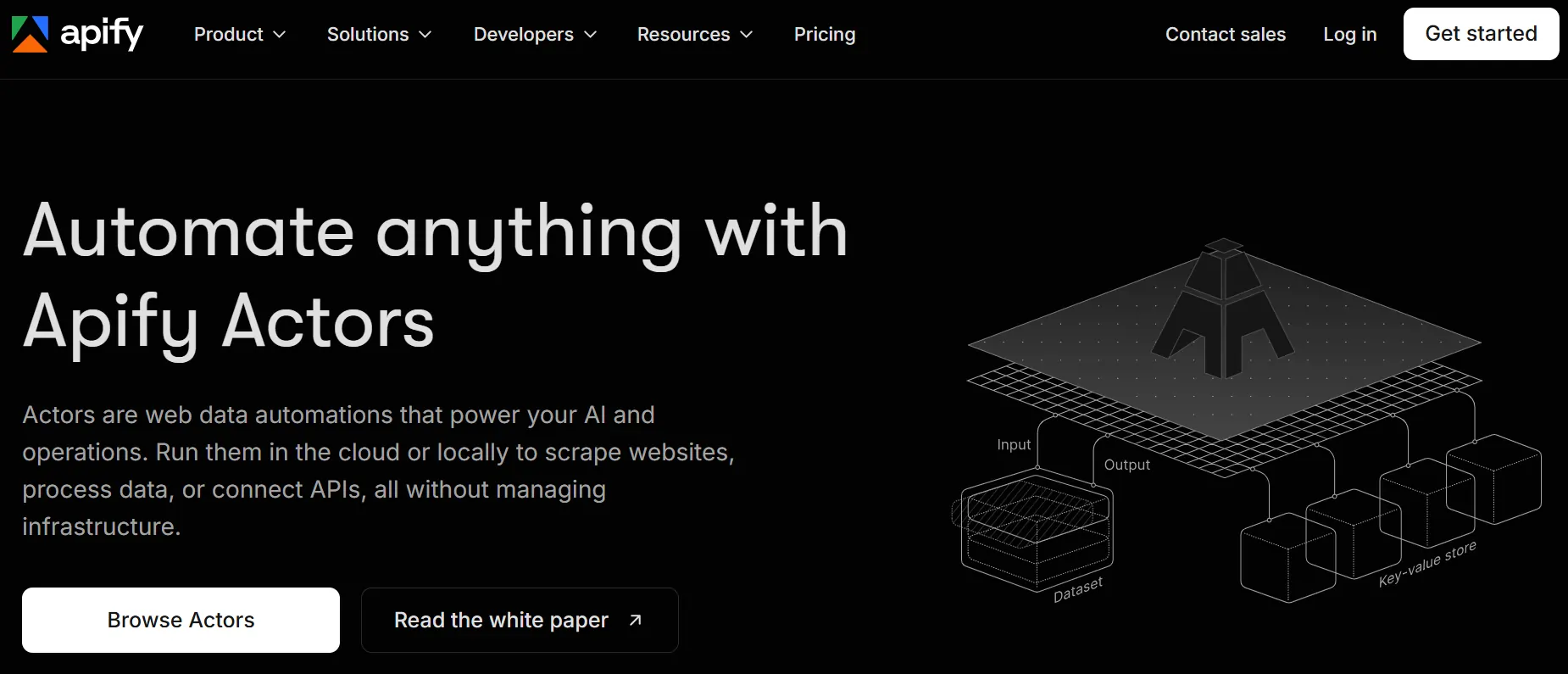
- Apify actors crawl the sources. Using Claude Code, we built custom Apify actors that automatically crawl event directories, organizer websites, and conference listing pages on a schedule. Apify handles the heavy lifting: JavaScript rendering, scale, scheduling, retries.
The actors we needed did not exist in the marketplace for our exact use case, so Claude Code wrote them for us. Again: zero code from our side.
- Firecrawl structures the pages. Firecrawl takes the event pages and turns them into clean, structured fields: event name, dates, city, venue, organizer, ticket info, official links. No fragile CSS selectors that break when an organizer redesigns their site.
Firecrawl reads the page the way a researcher would and returns the exact JSON schema we defined.
- Everything flows into the admin backend. New events, updated dates, new after-parties, all of it lands in the AFFMashup backend automatically. The system adds and maintains listings on its own. We review, the platform grows.
The result is a directory that updates itself. When an organizer announces new dates, our pipeline catches it. When a new conference launches, it shows up in our queue. Nobody on my team spends their day copy-pasting event details into a CMS.
This is the same Apify + Firecrawl pairing I use across my whole network. Firecrawl for turning any page into structured data, Apify for scheduled, scaled crawling with pre-built and custom actors. Different weapons, same arsenal. If you take one architecture idea from this case study, take this one.

Build Your Own Auto-Crawling Backend
Apify is the crawling engine behind AFFMashup. Use thousands of pre-built marketplace scrapers or have Claude Code create custom Actors for your exact workflow, without writing the code yourself.
Where AI Writes, and Where It Is Banned
This part matters more than any feature, so read it carefully.
AI on AFFMashup is allowed to do exactly one job with content: write summaries. We use OpenRouter to generate event summaries and descriptions from the crawled data. That is it.
AI is never allowed to invent the data itself. Dates, venues, cities, organizers, ticket details, all of it comes from the actual event websites via the Apify and Firecrawl pipeline. The AI writes around verified facts. It does not create facts.
Why am I this strict about it? Because the failure mode of AI-generated directories is well known: hallucinated events, wrong dates, venues that do not exist. One affiliate books a hotel in Barcelona for a conference that got moved to Budapest, and your platform is dead. Trust is the entire product.
Our setup gives a 100% data guarantee precisely because AI never touches the source of truth. Crawlers fetch reality, AI just makes it readable. If you are building any data-driven site with AI in the loop, steal this rule. It is the difference between a platform and a liability.
What This Costs (The Math That Ends the Meeting)
Here is the part that should annoy every agency that quoted you five figures for a directory site.
| Component | Traditional Route | Our Route |
|---|---|---|
| Application development | Dev team, weeks to months, $10K+ | Claude Code, 3 days, subscription cost |
| Product spec / documentation | PM or founder weeks | Claude Cowork, one working session |
| Data collection | VAs or data entry staff, ongoing monthly cost | Apify actors, automated, free tier to start |
| Data structuring | Custom parsers, dev maintenance forever | Firecrawl, schema-based, pennies per page |
| Content writing | Writers per event listing | OpenRouter summaries, fractions of a cent each |
| Ongoing maintenance | Retainer | The pipeline maintains itself |
The ongoing data operation for the entire platform runs on pennies. Not a metaphor. Firecrawl charges per page crawled, Apify’s free tier covers serious testing, and OpenRouter summary generation costs fractions of a cent per event. The most expensive input in the whole project was three days of our attention.
Compare that against what a “database-driven community platform with automated data pipelines” costs from a dev shop, and you understand why I keep writing these case studies.
The Honest Section: What Zero-Code Building Actually Requires
I built an audience by including the parts vendors skip, so here they are.
- Zero code does not mean zero effort. Three days of “complete effort” means three days of intense, focused work: describing, testing, catching bugs, refining. You are the product manager, QA tester, and decision maker all at once. It is faster than hiring developers by an order of magnitude. It is not passive.
- Your first platform attempt might fail. Ours did, on Abacus. Budget emotionally for one restart. The restart is cheap now, which changes everything about how you should think about experiments.
- The spec is 80% of the outcome. Claude Code executes what you describe. If your description is vague, your app is vague. Spend real time in Cowork before you build. This is the highest-leverage hour of the entire process.
- Crawled data still needs a review layer. Our pipeline is automated, but the admin backend exists so we can review what enters the platform. Automation collects; judgment approves. Do not skip the human checkpoint on data your users will act on.
- Pick tools with clean APIs and good docs. Claude Code wired Apify and Firecrawl into our backend easily because both are built API-first with documentation the AI understands natively. This is now a real selection criterion for every tool in my stack: can Claude Code work with it without friction?
Steal This Blueprint for Your Own Niche
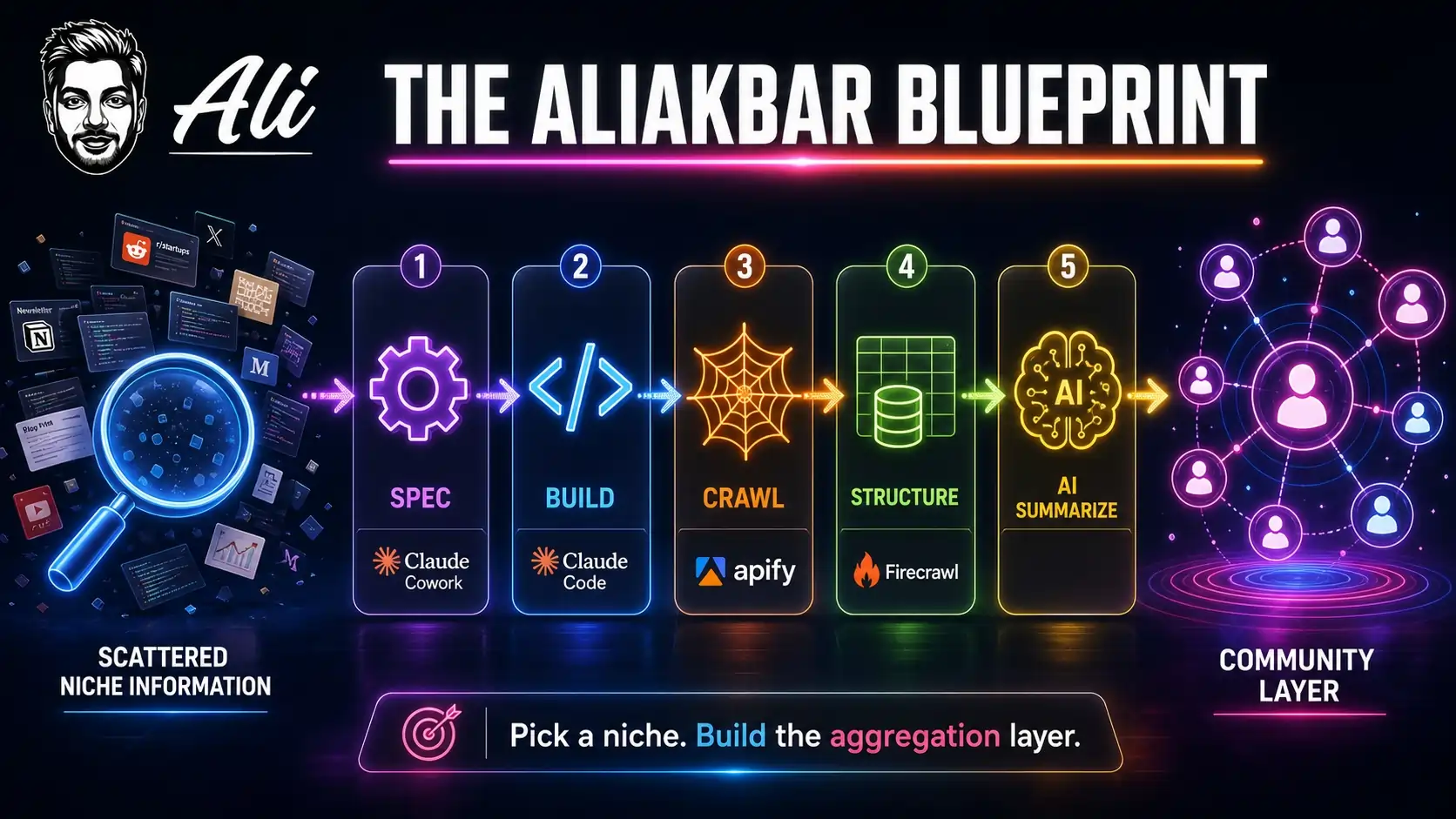
Nothing about this playbook is affiliate-industry specific. The pattern is: pick a niche where information is scattered, then build the aggregation layer.
- Spec in Claude Cowork. Describe the platform, every feature, the data model, and the admin flow until the document reads like a professional product brief.
- Build in Claude Code. Feed it the spec. Test in plain English. Budget 2 to 5 focused days.
- Crawl with Apify. Use marketplace actors where they exist, have Claude Code write custom actors where they do not.
- Structure with Firecrawl. Define your JSON schema once, and every messy source page comes back as a clean database row.
- Let AI summarize, never invent. Route content generation through OpenRouter or your model of choice, locked to verified crawled data only.
- Ship the community layer. Social sign-in, a Telegram bot, and tools people return to weekly. A directory gets visits; a community gets members.
SaaS deals, local events, crypto exchanges, coffee gear, whatever your niche is: the scattered-information problem exists there too, and the build cost just dropped to three days and pennies.
Quick Answers
Can you really build an app with zero coding knowledge?
Yes. AFFMashup was built entirely by Claude Code from a spec written in Claude Cowork. Nobody on the build knew how to code. Your job is describing, testing, and deciding, all in plain English.
How does AFFMashup keep 150+ events updated automatically?
Custom Apify actors crawl event directories and organizer websites on a schedule, Firecrawl converts the pages into structured data, and everything flows into the admin backend for review. No manual data entry anywhere in the pipeline.
Does AI write the event data?
No, and this is deliberate. AI (via OpenRouter) only writes summaries around data that Apify and Firecrawl pulled from real event websites. Dates, venues, and details are never AI-generated, which is how we guarantee data accuracy.
What did the whole build cost?
Three days of focused effort plus tool costs that amount to pennies for ongoing data operations. Apify and Firecrawl both have free tiers generous enough to build and test the entire pipeline before paying anything.

Aliakbar Fakhri
The founder of AFFINCO
The Close
For fifteen years, the moat around building software was knowing how to build software. That moat drained sometime in the last eighteen months, and most operators still have not walked across.
AFFMashup is my proof. A real platform, real users, a Telegram bot with daily activity, LinkedIn sign-ins, and a self-maintaining database of 150+ events, built in 3 days by people who cannot write a line of code, running on a data pipeline that costs pennies.
The blueprint is sitting above this paragraph. The only ingredient I cannot give you is the three days.
Start With the Data Layer
The data pipeline is the heart of this entire build, and you can test both tools free today before committing to a paid setup.
Firecrawl
Get 1,000 free credits every month with no card required. Turn any website into clean, structured data for AI workflows, databases, and automation.
Apify
Get $5 in free platform credit, plus access to thousands of ready-made scrapers in the Apify marketplace.
Build it, point it at your niche, and let the output make the decision. Evidence beats hype. Every time.
Free-credit availability and account requirements may be changed by the providers.And if you want to see the finished product before you build your own, AFFMashup is live.
Join the community, run the Conflict Checker on your event calendar, and tell me it is not better than the spreadsheet you were using.
Affiliate Disclosure: This post may contain some affiliate links, which means we may receive a commission if you purchase something that we recommend at no additional cost for you (none whatsoever!)
Similar Posts


About the author:
Aliakbar Fakhri
Founder & CEO of AFFiNCO
I’m Ali, Founder of AFFiNCO, with 15+ years in SEO, paid ads and affiliate marketing.
I run 65+ sites of my own, so every strategy on this blog was tested on my money before it reached you. No guru fluff. Just what actually works.