
Firecrawl Lead Generation Playbook: Methods, Prompts and Costs

By :
Ali
July 18, 2026
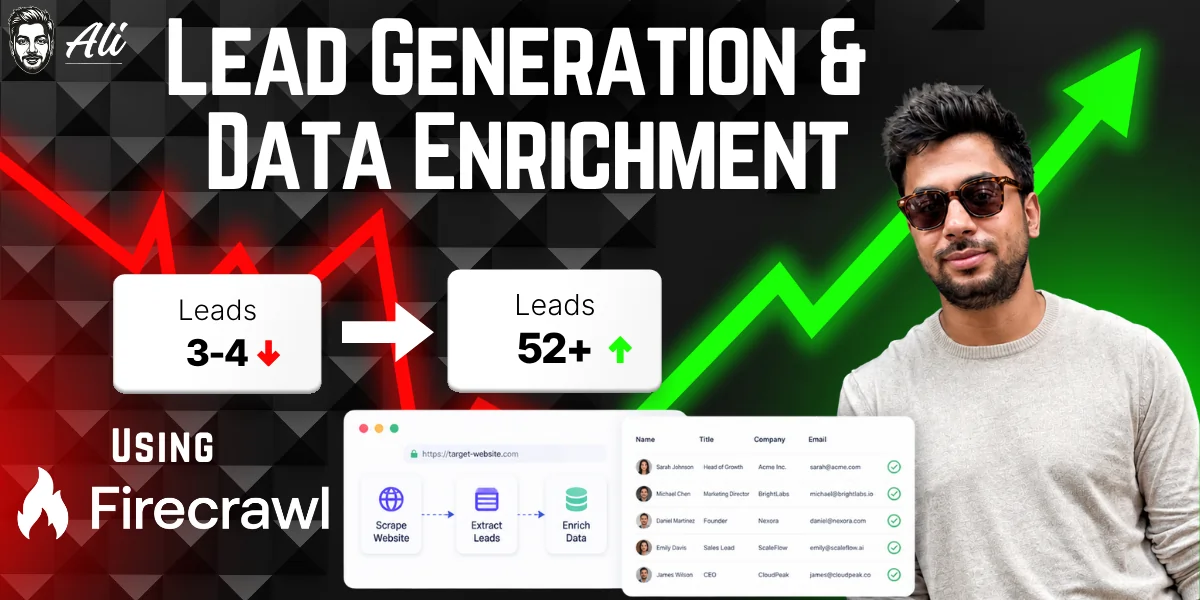
Most lead generation advice is written by people who have never paid for a bad lead list.
I have. I spent over a decade in affiliate marketing and paid media before I moved into AI automation, and I have bought the stale databases, hired the VAs who copy-paste LinkedIn profiles into spreadsheets, and paid enrichment tools that charge enterprise money to tell me a company’s employee count is “51-200.” The lead data industry runs on markup, and the markup exists because gathering fresh data used to be technical.
It is not technical anymore. For the past 7 to 8 months I have been running Firecrawl across my properties (AFFMaven, AFFMashup, our apps, and my own CRM), and it has quietly become the cheapest, most reliable lead data engine I have ever used.
This playbook is exactly how I use it. No theory. Systems, with receipts.
The Lead Data Problem, Stated Plainly
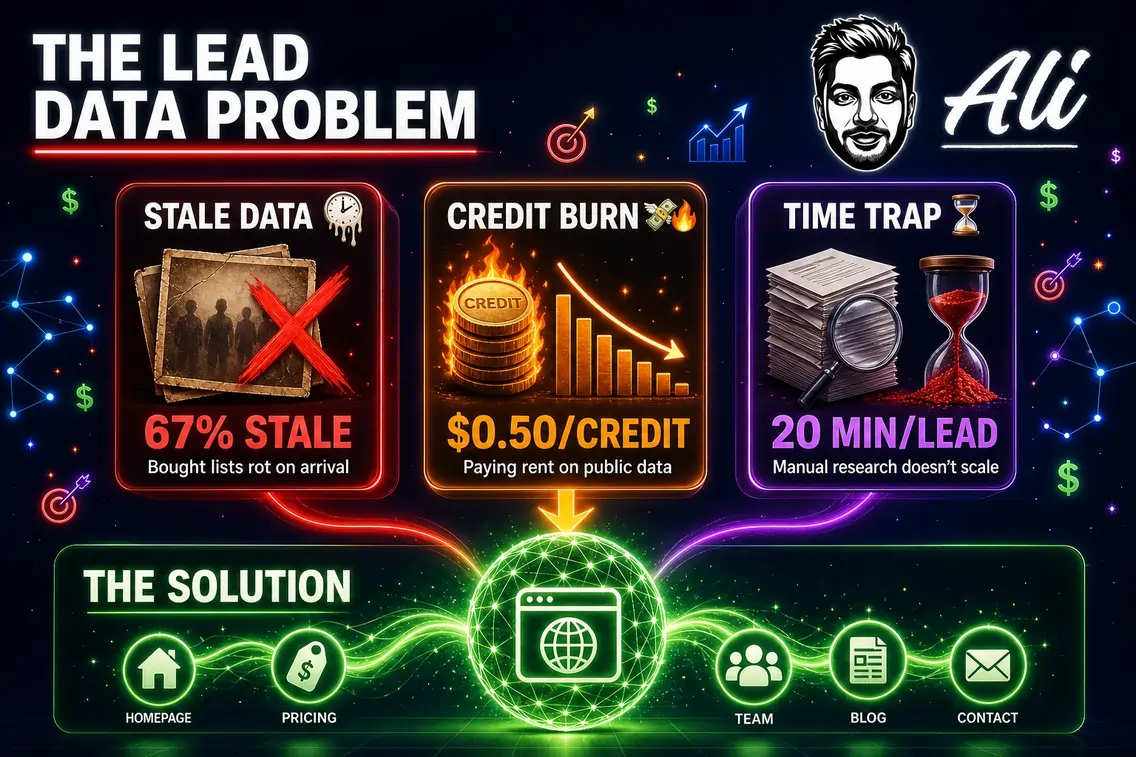
Every B2B pipeline runs on the same fuel: who is the company, what do they sell, who do I contact, and what do I say that does not sound like spam.
The standard ways to get that fuel are all broken in a familiar way:
The web itself is the freshest lead database that exists. Every company you want to reach maintains its own record: a homepage that says what they do, a pricing page that says how they charge, a team page, a contact page, a blog that tells you what they care about this quarter. The only problem was extraction. That is the problem Firecrawl deleted.
What Firecrawl Is (60 Seconds, Then We Build)
Firecrawl is an API that turns any website into clean, structured data. Give it a URL, it returns the page as readable markdown or as exact JSON fields you define. It renders JavaScript, strips the junk, and connects natively to the AI tools you already use: Claude, ChatGPT, Perplexity, and every serious agent platform.
Receipts, because I do not ask you to trust adjectives: 149K+ GitHub stars, 1.25 million developers, over 5 billion requests served, used by Apple, Shopify, and Canva. Pricing is 1 credit per page with 1,000 free credits every month.
Start Firecrawl With 1,000 Free Credits
Set up before following the playbook. Create your Firecrawl account through my partner link and receive 1,000 free credits every month with no card required. This is enough to complete everything covered in this article.
- 1,000 Credits Free every month
- 10% Off First purchase
- ~2 Months Free With annual plans
No coupon code or credit card is required. The eligible discount is applied automatically through the partner link.
Now the part most guides get wrong. They assume you need to build something to use this. You do not.
Method 1: The No-App Method (This Is Where Most People Should Start)
Here is what changed in the last year, and almost nobody in lead gen has noticed: you no longer need an app, a domain, hosting, or a developer to run automated lead generation. You need two connectors and plain English.

Open Claude (the desktop app, or Cowork in your browser) or ChatGPT’s desktop app. Connect Firecrawl as a connector, the same one-click flow as connecting your Gmail. Connect Google Sheets the same way. That is your entire infrastructure. I have tested this exact setup and it is how the non-technical people on my team work daily.
Then you talk:
Search for digital marketing agencies in Dubai that mention
"performance marketing" on their site. For the top 20, scrape
their homepage and services page. Give me a sheet with: company
name, what they specialize in, pricing model if visible, contact
email or form URL, and one specific detail I could reference in
outreach. Write it to a new Google Sheet called "Dubai Agencies".
That prompt is a complete lead generation run. Firecrawl finds and scrapes, the AI structures and personalizes, and the results land in a spreadsheet you can act on the same hour. No tool subscriptions were harmed in the process.
More prompts from my actual usage, adjust the niche and fire:
Scrape this directory page [URL] and extract every company listed.
Then visit each company site and pull: what they sell, team size
signals, tech stack hints, and their contact page URL. Sheet it.
Here is my existing lead sheet [connect it]. For every row that has
a website but empty columns, scrape the site and fill in: one-line
description, pricing model, and a personalized opener referencing
something specific on their site.
Notice what that second prompt is. It is data enrichment, the thing platforms charge four figures a year for, running on a free tier and a sentence.
📌 Operator note: the quality of your lead output equals the quality of your definition. “Find me leads” produces garbage.
“Find companies that do X, show evidence of Y, and mention Z on their pricing page” produces a filtered list your closer will thank you for. The psychology of lead gen did not change, only the labor did.
Method 2: Structured Extraction with Schemas (When You Need Fields, Not Prose)
The no-app method is conversational. When you want the same fields from hundreds of pages, you want Firecrawl’s Extract endpoint, which pulls exact structured data using a schema you define:
{
  "company_name": "string",
  "what_they_sell": "string",
  "pricing_model": "string",
  "starting_price": "string",
  "contact_email": "string",
  "social_links": "array",
  "hiring": "boolean"
}
Point Extract at any list of URLs with that schema and every page comes back as the same clean row, regardless of how differently each site is designed. No CSS selectors, no parsers that break when someone redesigns their homepage. The AI reads the page like a human researcher and fills the fields.
That “hiring” boolean is not decoration, by the way. A company actively hiring for a role adjacent to your service is a buying signal, and it is sitting right there on their careers page.
Schemas let you systematically collect signals like that at scale: recent blog activity, pricing changes, new product mentions, event participation. Signal-based outreach outperforms cold spray every time, and now the signal collection is automated.
Method 3: Crawl Directories and Listings for Lead Sourcing
Directories are pre-qualified lead lists someone else maintains for free. Industry associations, “top agencies in {city}” pages, conference sponsor and exhibitor lists, marketplace vendor listings, award shortlists, chamber of commerce indexes.
The workflow: Firecrawl’s Map endpoint lists every URL on the directory in seconds, Crawl scrapes the listing pages, and Extract structures each entry. Then a second pass visits each company’s own site for the enrichment fields. Two passes, one afternoon, and you have a lead database that the list-sellers would charge you thousands for, except yours is from this week, not last year.
Conference lists deserve special mention because I have spent years on the event circuit, from affiliate conferences to AI summits, and I can tell you the exhibitor list is published months before the event. Scrape it, enrich it, and reach out before the booth chaos. Everyone else networks at the show. You started in the quarter before it.
Method 4: Enrich Your CRM Automatically (My Own Build)
This is the part I can show receipts on, because I built it for myself.
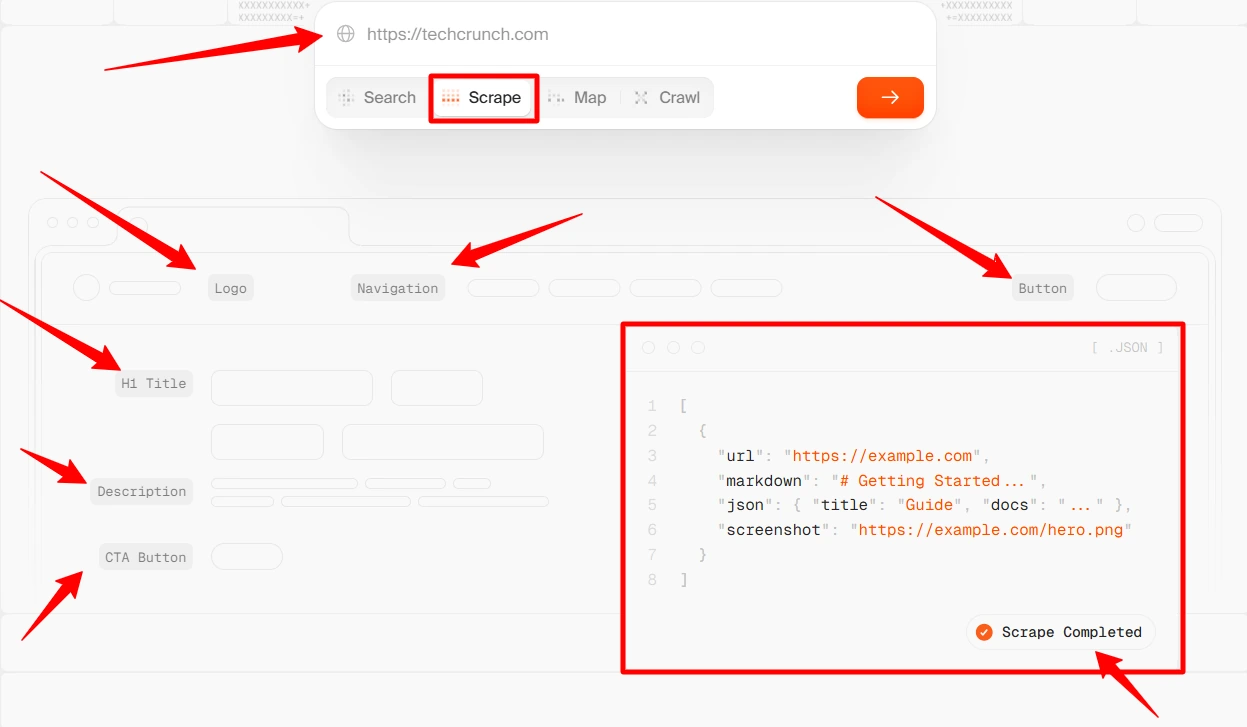
We run our own CRM at AFFiNCO. When a company enters it, a Firecrawl-powered pipeline fetches their logo, company information, and contact details automatically, on a cron job, with no human touching anything. New record comes in thin, and by the next cycle it is filled out: logo pulled from their site, description extracted, contact details captured where publicly listed.
Here is what should get your attention: I did not write the code for it. I built it with Claude Code by pasting in my Firecrawl API key and describing what I wanted the pipeline to do.


The AI understands Firecrawl’s API natively, wired the endpoints, and built the cron logic. I have said this before and I will keep saying it: I do not write code, and I ship working systems weekly. That is the actual revolution here, not the chatbots.
If you run HubSpot, Pipedrive, Attio, or anything with an API, the same pattern applies. Describe the enrichment flow to Claude Code or Codex, hand it the Firecrawl key, and let it build the connector. Or skip code entirely and run the enrichment through n8n; my team published a full Firecrawl + n8n automation guide with the exact lead enrichment workflow.
And when the job is heavy-duty bulk scraping of specific platforms, I pair Firecrawl with Apify and its marketplace of pre-built scrapers. Different weapon, same arsenal. Their free tier includes $5 in platform credit if you want to test both sides.
The Honest Section: Accuracy, Hit Rates, and Compliance
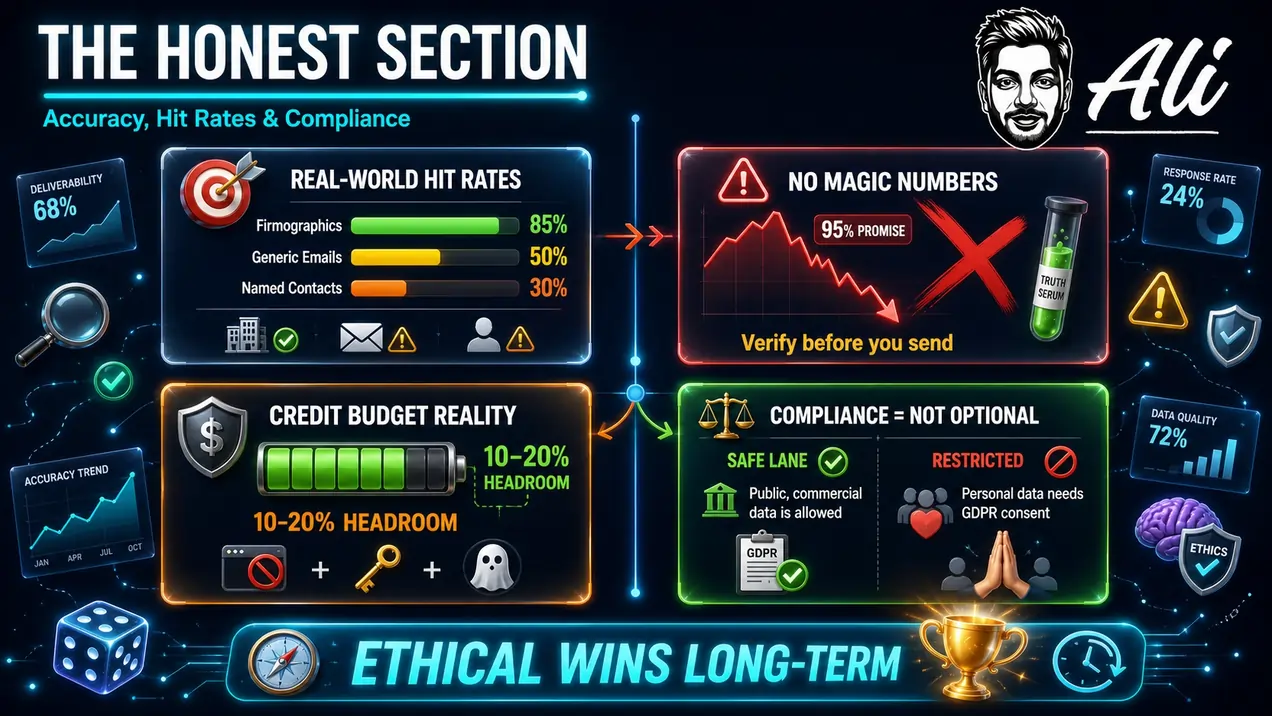
I built an audience by writing about what actually happens, including the parts vendors skip. Three truths before you scale this:
1. Contact data hit rates are real-world, not brochure.
Public websites list emails maybe half the time, often generic (info@, hello@). Firecrawl extracts what exists; it does not conjure what does not. For named decision-maker emails, you will still pair this stack with a verification tool, and you should budget for a meaningful percentage of blanks.
2. Anyone promising 95% email coverage from web scraping is selling you the dream.
I ship the system, and the system says: expect strong coverage on firmographics, partial coverage on contacts, and verify before you send.
3. Failed scrapes and protected sites happen.
Most business sites scrape clean. Some sit behind aggressive protection and cost extra credits in stealth mode or fail outright. Plan your credit budget with 10 to 20% headroom.
4. Compliance is not optional decoration.
Scraping public commercial information (what a company sells, its pricing, its published contact channels) is the safe lane, and it is the lane this entire playbook drives in.
Personal data is a different lane with different rules: GDPR and similar regimes apply the moment you process personal information about individuals, regardless of how you obtained it.
5. Enrich companies aggressively.
Handle people carefully, keep records of your lawful basis, and honor opt-outs like your domain reputation depends on it, because it does.
Ethical wins long-term. That is not a slogan on my sites, it is risk management.
What This Costs (The Math That Ends the Meeting)
| Workload | Firecrawl Credits | Cost |
|---|---|---|
| Source + enrich 100 leads (3-5 pages each) | ~400-500 | Free tier |
| Directory crawl + two-pass enrichment, 500 companies | ~2,000-2,500 | Free tier + $16 Hobby month |
| Ongoing CRM enrichment, 200 new records/month | ~800-1,000 | Free tier |
| Agency-scale, multiple clients | 20,000+ | $83 Standard (100K credits) |
Compare any row against a data platform subscription or a research VA’s monthly invoice. The delta is your margin.
Quick Answers on FireCrawl
Can Firecrawl scrape leads?
Yes. It scrapes company websites, directories, and listings into structured lead data (firmographics, offerings, public contact details), driven by API or plain-English prompts through Claude and ChatGPT connectors.
How do I enrich my CRM with Firecrawl?
Feed your CRM’s records through Firecrawl’s Extract endpoint with a schema, on a schedule. I run exactly this on my own CRM via a cron job that Claude Code built for me: logos, descriptions, and contact details filled automatically.
Is Firecrawl good for B2B data?
For fresh firmographic and signal data straight from company websites, it is the best value I have used. For named contact emails, pair it with a verification tool and keep your hit-rate expectations honest.

Aliakbar Fakhri
The founder of AFFINCO
The Close
Lead generation has always rewarded whoever holds the freshest information and acts on it first. For twelve years I watched that edge belong to whoever had the biggest budget for data tools and researchers. That era ended quietly, sometime in the last eighteen months, and most of your competitors have not noticed yet.
The playbook is sitting above this paragraph. Two connectors, a schema, a directory, and a cron job. Start with Method 1 today; it costs nothing and needs nothing you do not already have open in a browser tab.
Run This Playbook Free
Create your Firecrawl account through my partner link and test the complete lead enrichment workflow before paying for another data platform.
- 1,000 Free Monthly Credits No card required and enough for your first 200+ enriched leads.
- 10% Off Your First Purchase The discount is applied automatically through my partner link.
- About 2 Months Free Choose annual billing when you are ready to scale the workflow.
Build it, test it against whatever you pay for lead data today, and let the numbers make the decision. Evidence beats hype. Every time.
Affiliate Disclosure: This post may contain some affiliate links, which means we may receive a commission if you purchase something that we recommend at no additional cost for you (none whatsoever!)
Similar Posts





About the author:
Aliakbar Fakhri
Founder & CEO of AFFiNCO
I’m Ali, Founder of AFFiNCO, with 15+ years in SEO, paid ads and affiliate marketing.
I run 65+ sites of my own, so every strategy on this blog was tested on my money before it reached you. No guru fluff. Just what actually works.